1
Downloads

To understand why "anak vs ibu" content performs so exceptionally well in popular media, one must look at the cultural fabric of the societies consuming it. In many Eastern and Asian cultures, family structures are deeply rooted in filial piety, respect for elders, and maternal authority.
Psychological and Cultural Triggers: Why This Content Virals
The clash between "Anak" and "Ibu" in media often serves as a proxy for the clash between traditional collectivism and modern individualism.
By laughing at digital caricatures of strict mothers, younger audiences process the stress of high academic, financial, and marital expectations placed upon them by the older generation. It transforms a source of real-world tension into community solidarity. Conclusion: A Mirror to Society anak vs ibu kandung nya xxx video sex darrmel repack
While social media is fast-paced, cinema offers a more nuanced look at these dynamics. Historically, cinema defaulted to stereotyped gender roles —the martyr mother and the rebellious child. However, current trends show:
: Many "Anak vs. Ibu" tropes are rooted in classic stories like Malin Kundang
In many Eastern cultures, parental love is traditionally expressed through discipline, high academic expectations, and emotional restraint rather than overt praise. Media provides a safe space to vent about these demanding standards. To understand why "anak vs ibu" content performs
: Contemporary films often move away from "winning" the conflict, focusing instead on how both mother and child adapt to a rapidly changing social landscape.
Anak can win major points by queuing up Kawin Muda (the old Sukma Ayu era) or Tukang Bubur Naik Haji for Ibu. It shows respect for her history. In return, Ibu might sit through one episode of Avatar: The Last Airbender (which, plot twist, Ibu ends up loving because Iroh reminds her of her late father).
In living rooms across Indonesia—from bustling Jakarta apartments to quiet homes in Surabaya and Bandung—a silent (and sometimes not-so-silent) war is being waged. The battleground is the 55-inch smart TV screen. The weapons are HDMI cables, streaming passwords, and Bluetooth earphones. The combatants? An ibu (mother) looking for comfort, and her anak (child) looking for identity. By laughing at digital caricatures of strict mothers,
Studi pada 2025 menunjukkan bahwa lebih dari 70 persen remaja merasa tidak nyaman dengan jejak digital yang dibuat oleh orang tuanya sejak kecil, dengan banyak yang mengaku malu, terganggu, bahkan menjauh dari keluarga. Gejala yang lebih ekstrem adalah maraknya video viral di media sosial di mana orang tua memarahi, membentak, bahkan mempermalukan anak-anaknya di depan kamera—disembunyikan di balik caption "biar netizen yang menilai".
A sci-fi epic centered entirely on a mother trying to bridge the gap with her nihilistic daughter across the multiverse.
To understand why "anak vs ibu" content performs so exceptionally well in popular media, one must look at the cultural fabric of the societies consuming it. In many Eastern and Asian cultures, family structures are deeply rooted in filial piety, respect for elders, and maternal authority.
Psychological and Cultural Triggers: Why This Content Virals
The clash between "Anak" and "Ibu" in media often serves as a proxy for the clash between traditional collectivism and modern individualism.
By laughing at digital caricatures of strict mothers, younger audiences process the stress of high academic, financial, and marital expectations placed upon them by the older generation. It transforms a source of real-world tension into community solidarity. Conclusion: A Mirror to Society
While social media is fast-paced, cinema offers a more nuanced look at these dynamics. Historically, cinema defaulted to stereotyped gender roles —the martyr mother and the rebellious child. However, current trends show:
: Many "Anak vs. Ibu" tropes are rooted in classic stories like Malin Kundang
In many Eastern cultures, parental love is traditionally expressed through discipline, high academic expectations, and emotional restraint rather than overt praise. Media provides a safe space to vent about these demanding standards.
: Contemporary films often move away from "winning" the conflict, focusing instead on how both mother and child adapt to a rapidly changing social landscape.
Anak can win major points by queuing up Kawin Muda (the old Sukma Ayu era) or Tukang Bubur Naik Haji for Ibu. It shows respect for her history. In return, Ibu might sit through one episode of Avatar: The Last Airbender (which, plot twist, Ibu ends up loving because Iroh reminds her of her late father).
In living rooms across Indonesia—from bustling Jakarta apartments to quiet homes in Surabaya and Bandung—a silent (and sometimes not-so-silent) war is being waged. The battleground is the 55-inch smart TV screen. The weapons are HDMI cables, streaming passwords, and Bluetooth earphones. The combatants? An ibu (mother) looking for comfort, and her anak (child) looking for identity.
Studi pada 2025 menunjukkan bahwa lebih dari 70 persen remaja merasa tidak nyaman dengan jejak digital yang dibuat oleh orang tuanya sejak kecil, dengan banyak yang mengaku malu, terganggu, bahkan menjauh dari keluarga. Gejala yang lebih ekstrem adalah maraknya video viral di media sosial di mana orang tua memarahi, membentak, bahkan mempermalukan anak-anaknya di depan kamera—disembunyikan di balik caption "biar netizen yang menilai".
A sci-fi epic centered entirely on a mother trying to bridge the gap with her nihilistic daughter across the multiverse.
It's very easy to find and install Novelist on your smartphone. Just follow the above link or search in the Android marketplace. Click on Install App and you're done.
Novelist is completely free: no buying costs, in-app purchases or hidden charges. And no ads too, so you can concentrate only on what matters to you: writing!
Novelist sports a complete tutorial and an in-app help section. Non enough? Just use our email or the provided contact form to get in touch, and we'll answer as soon as possible.
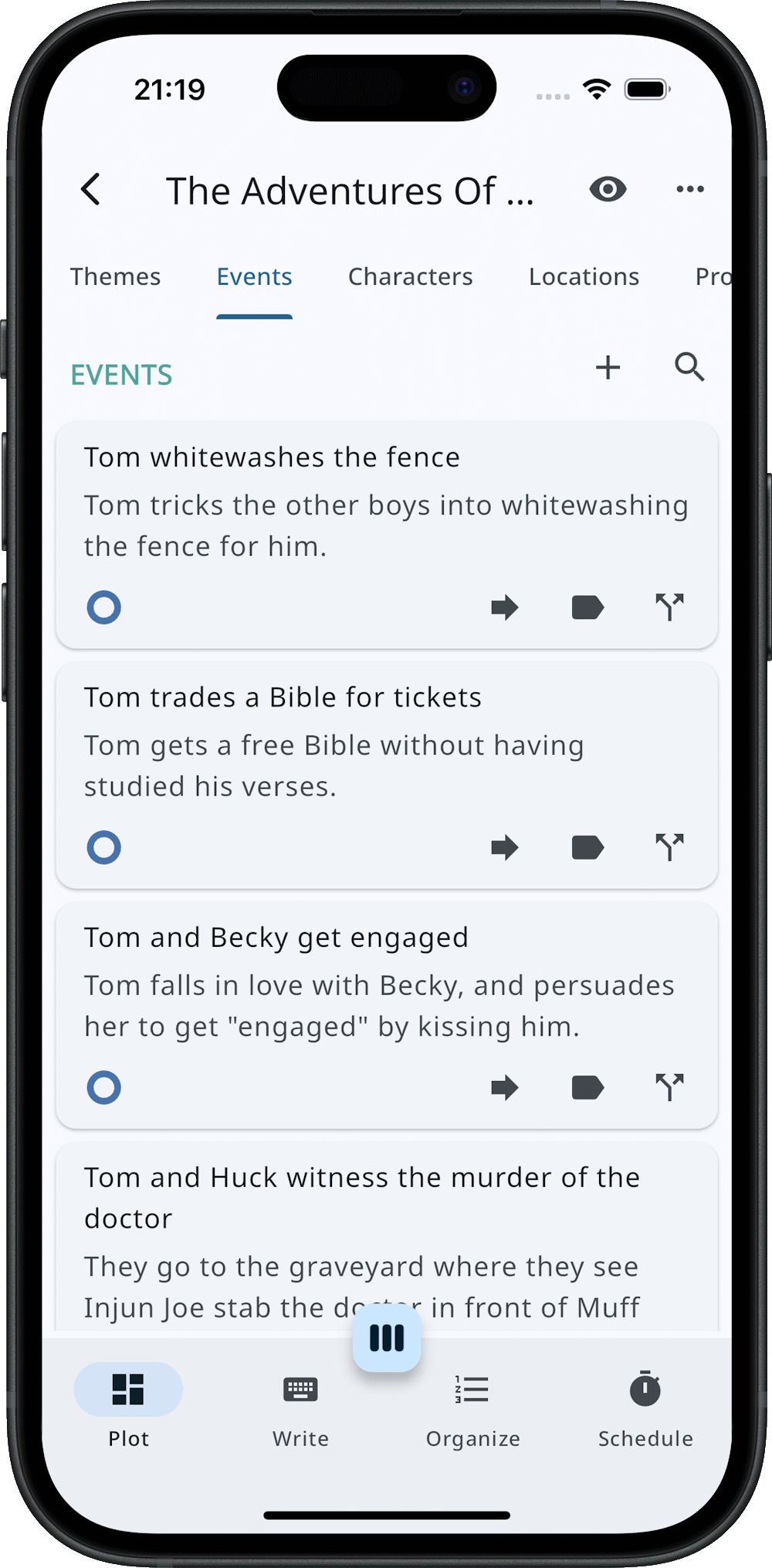
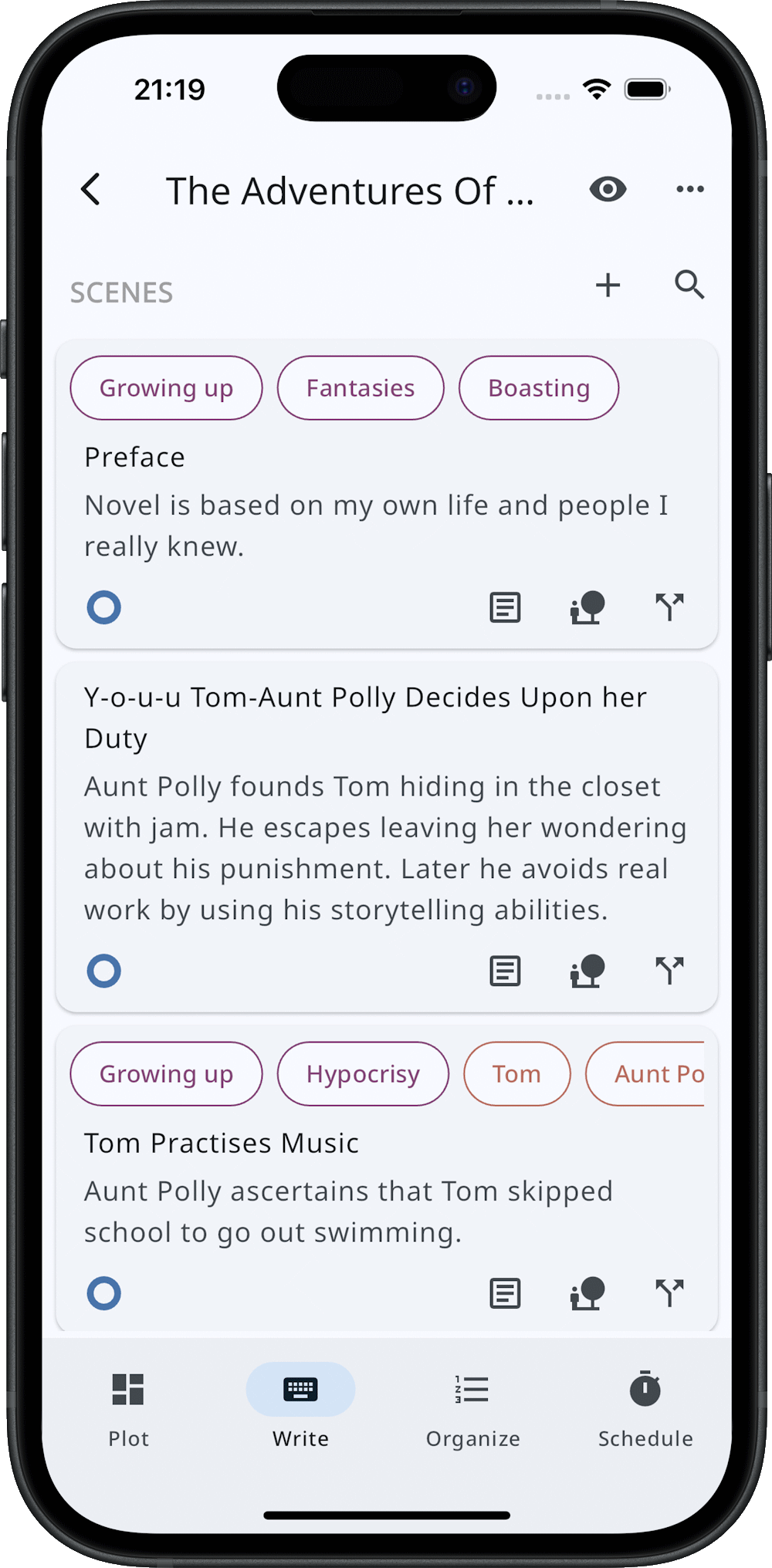
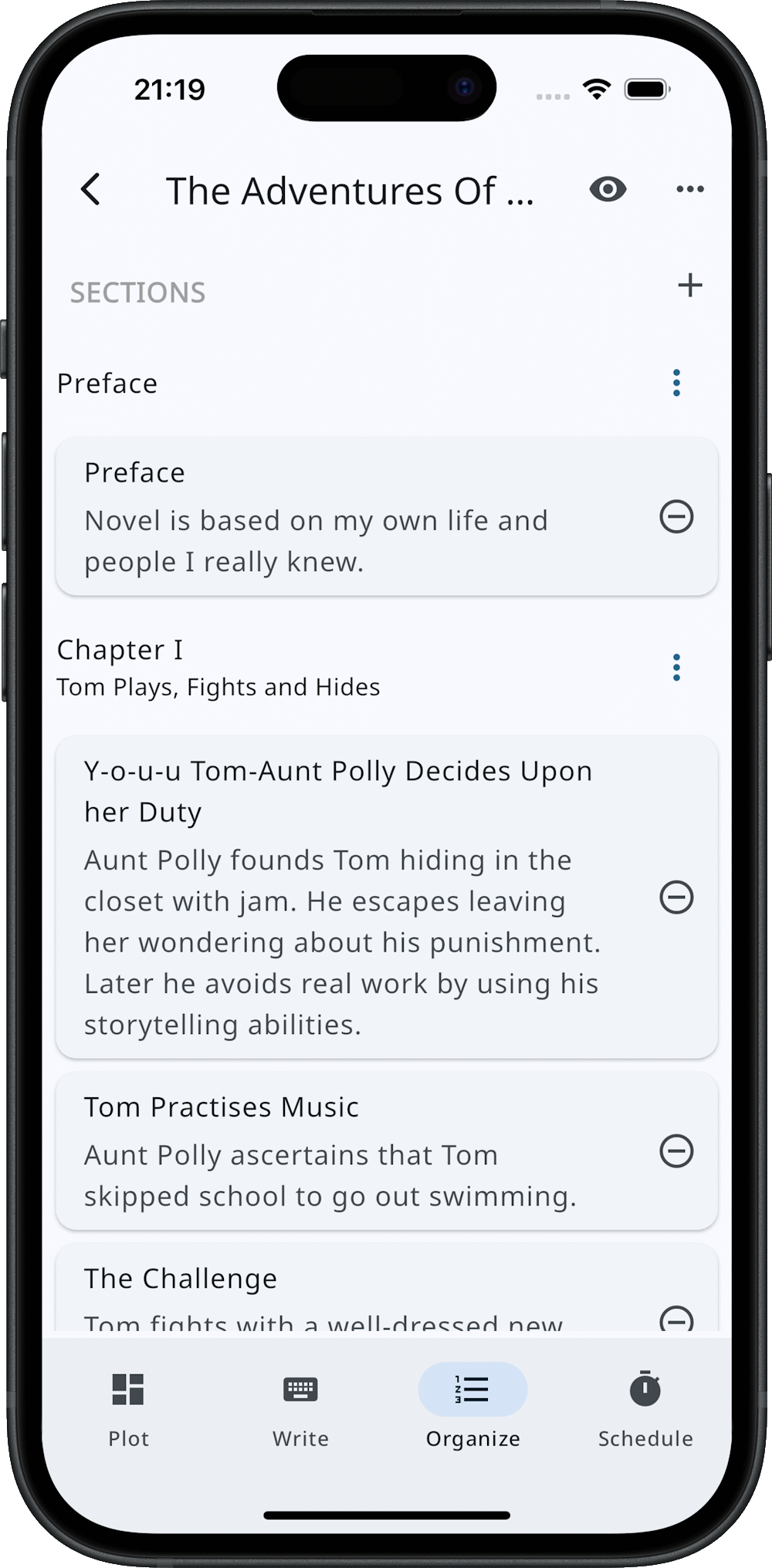
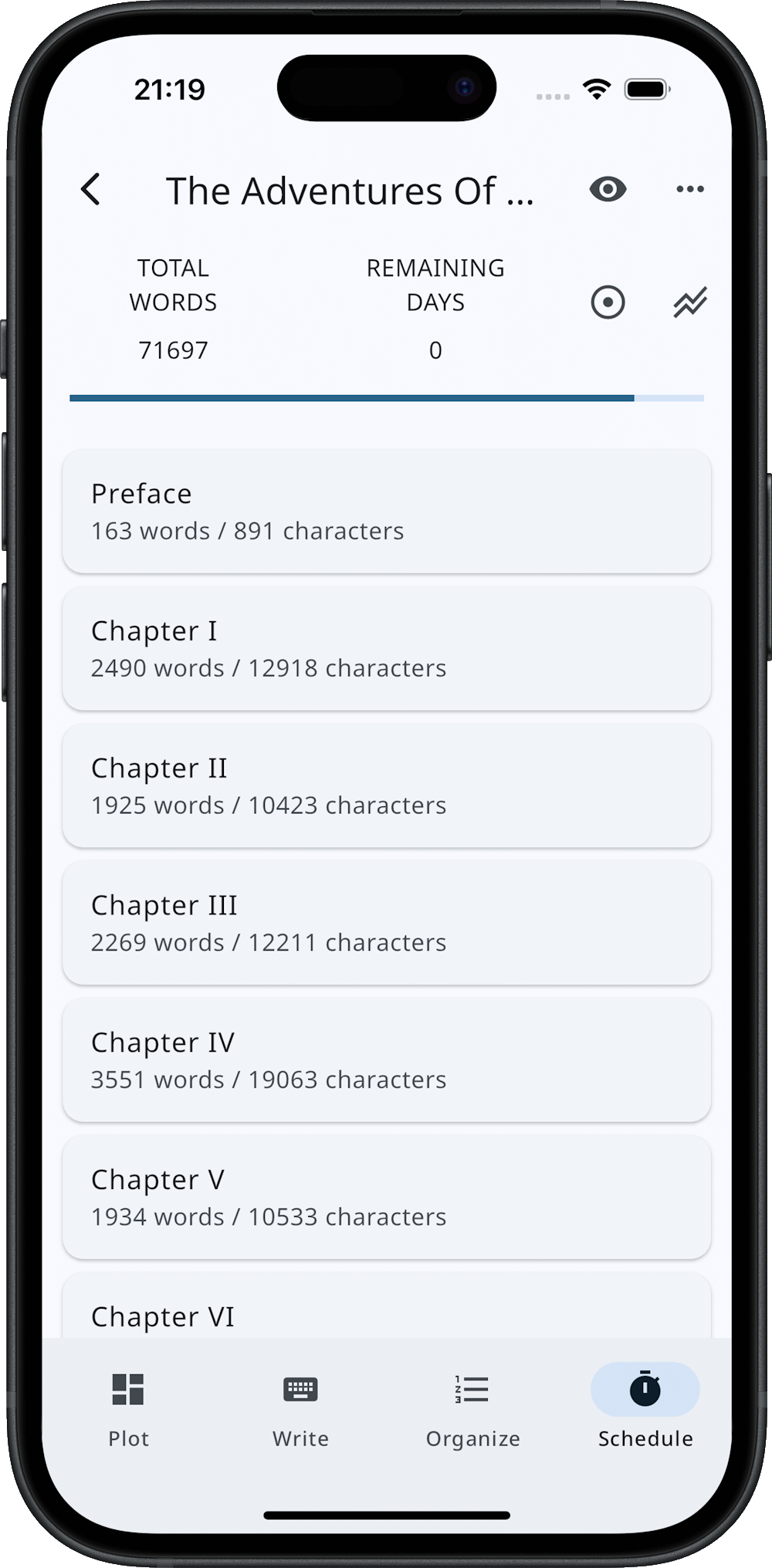
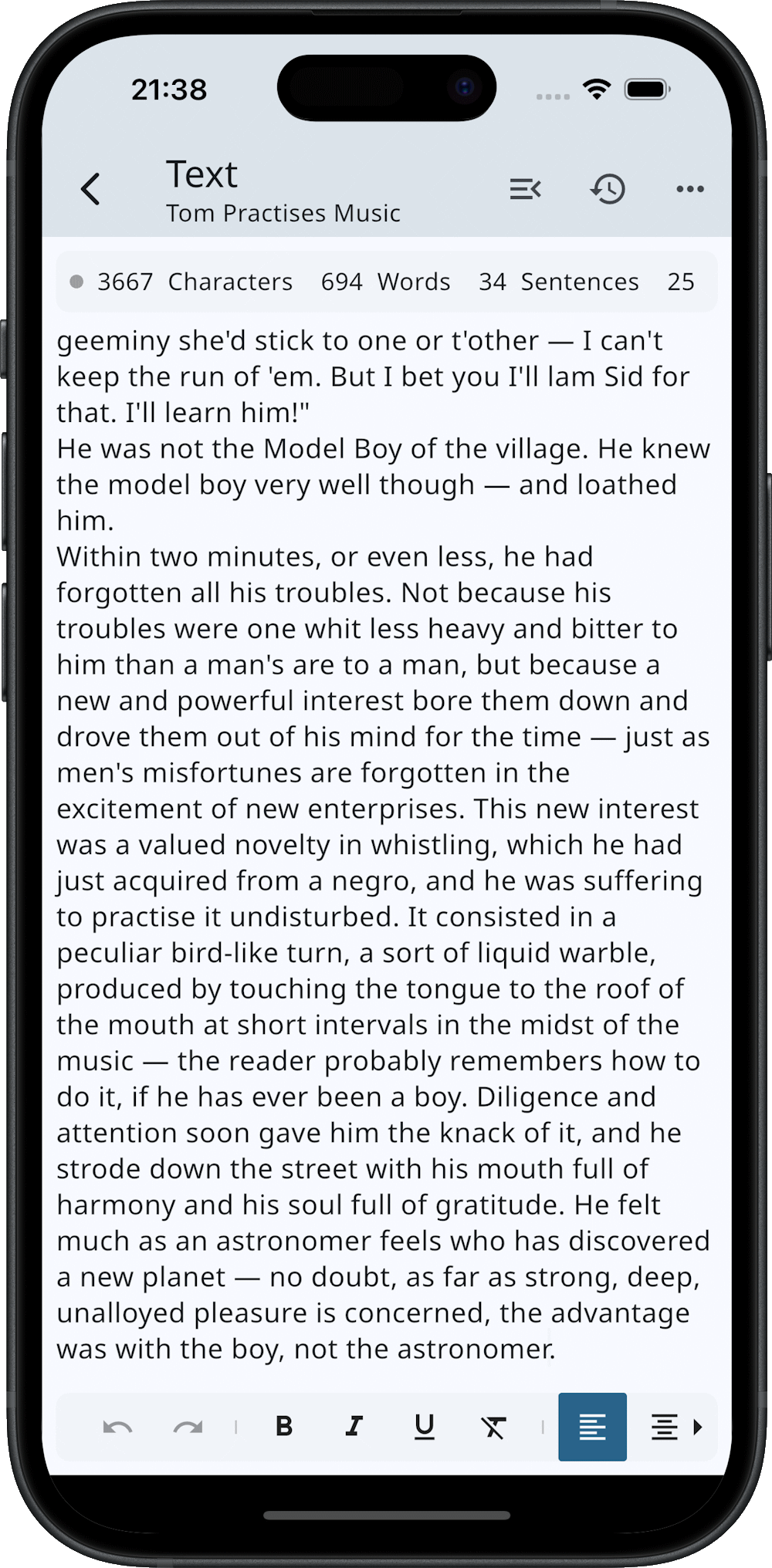
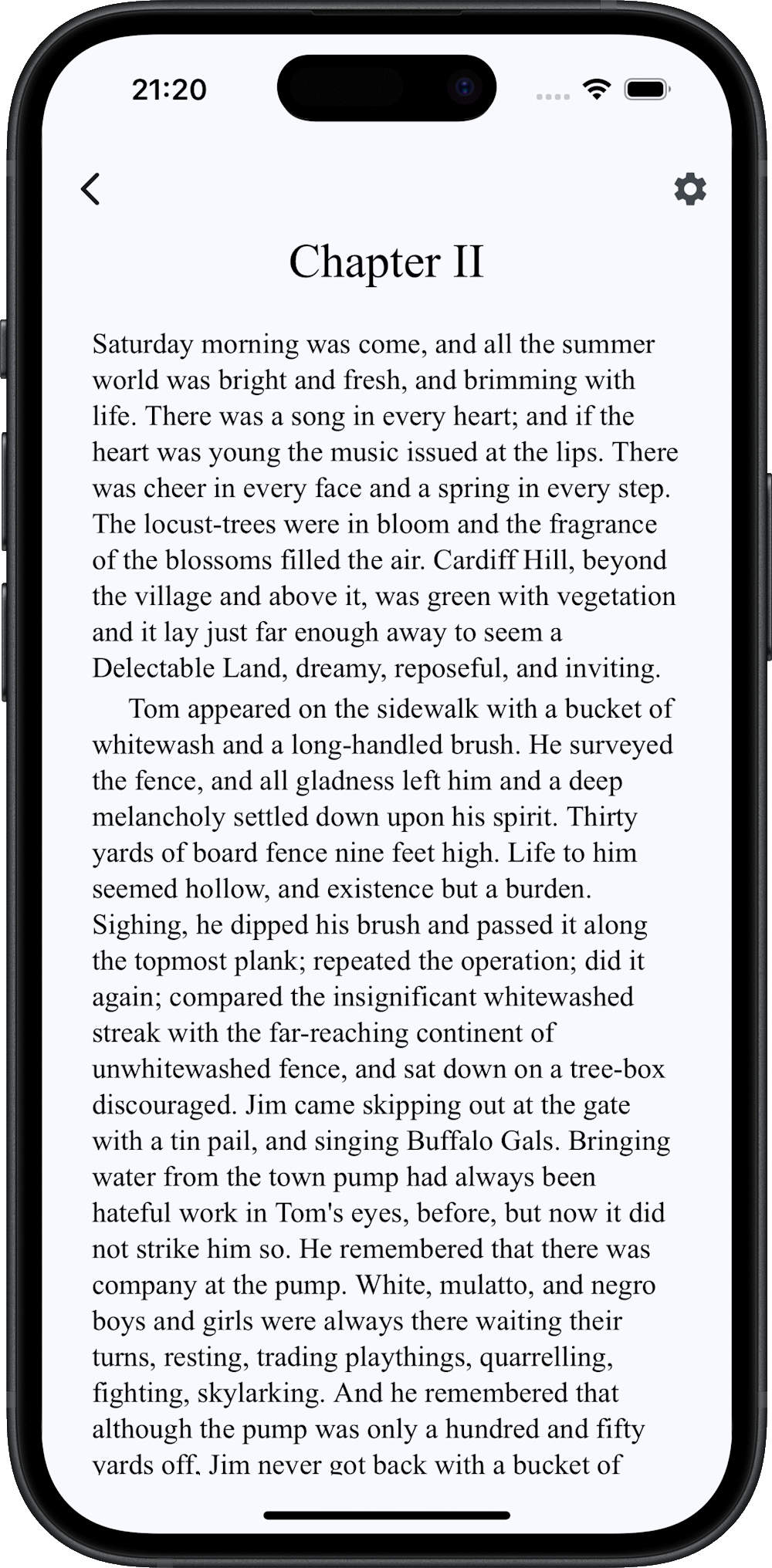
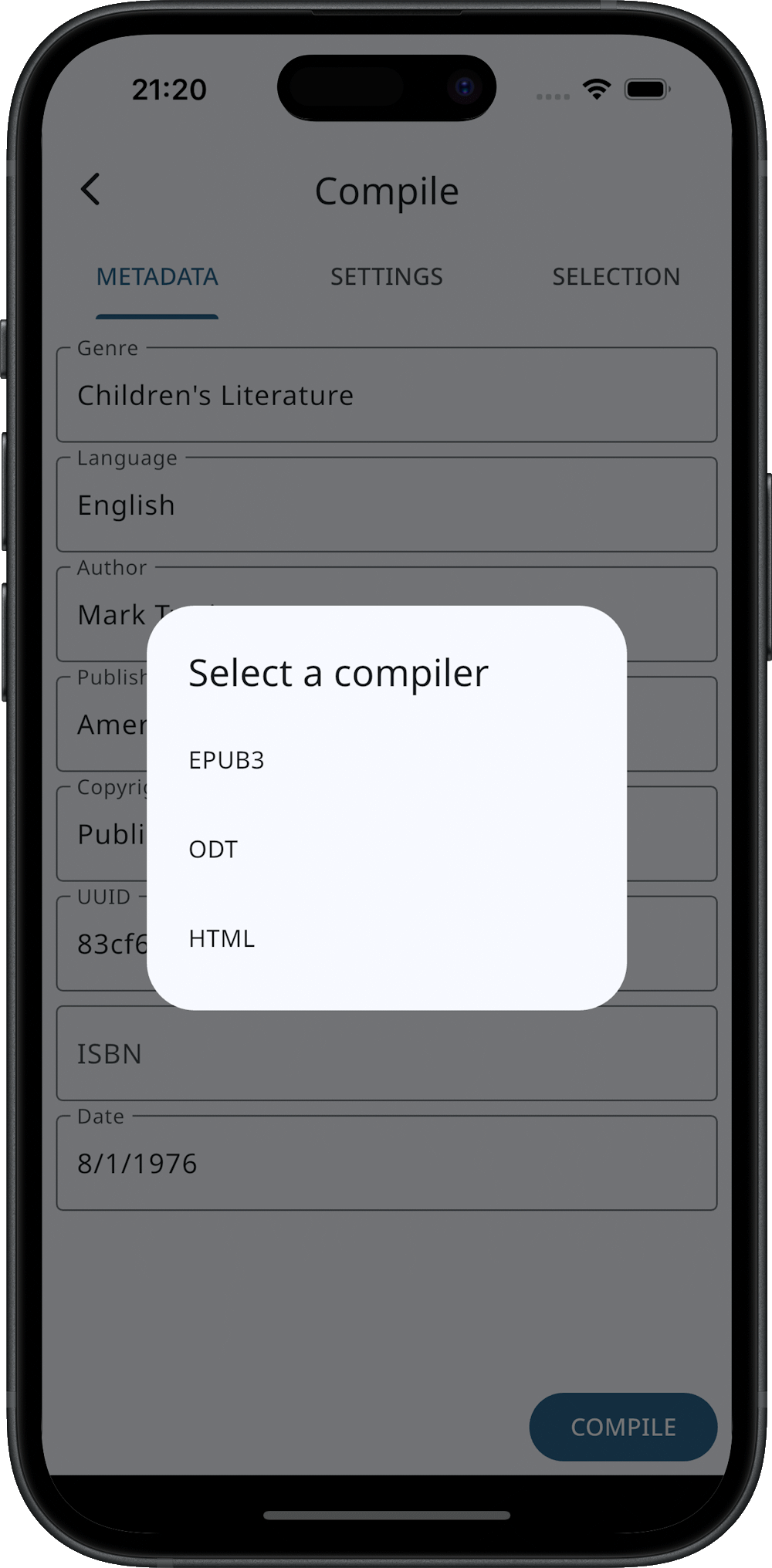
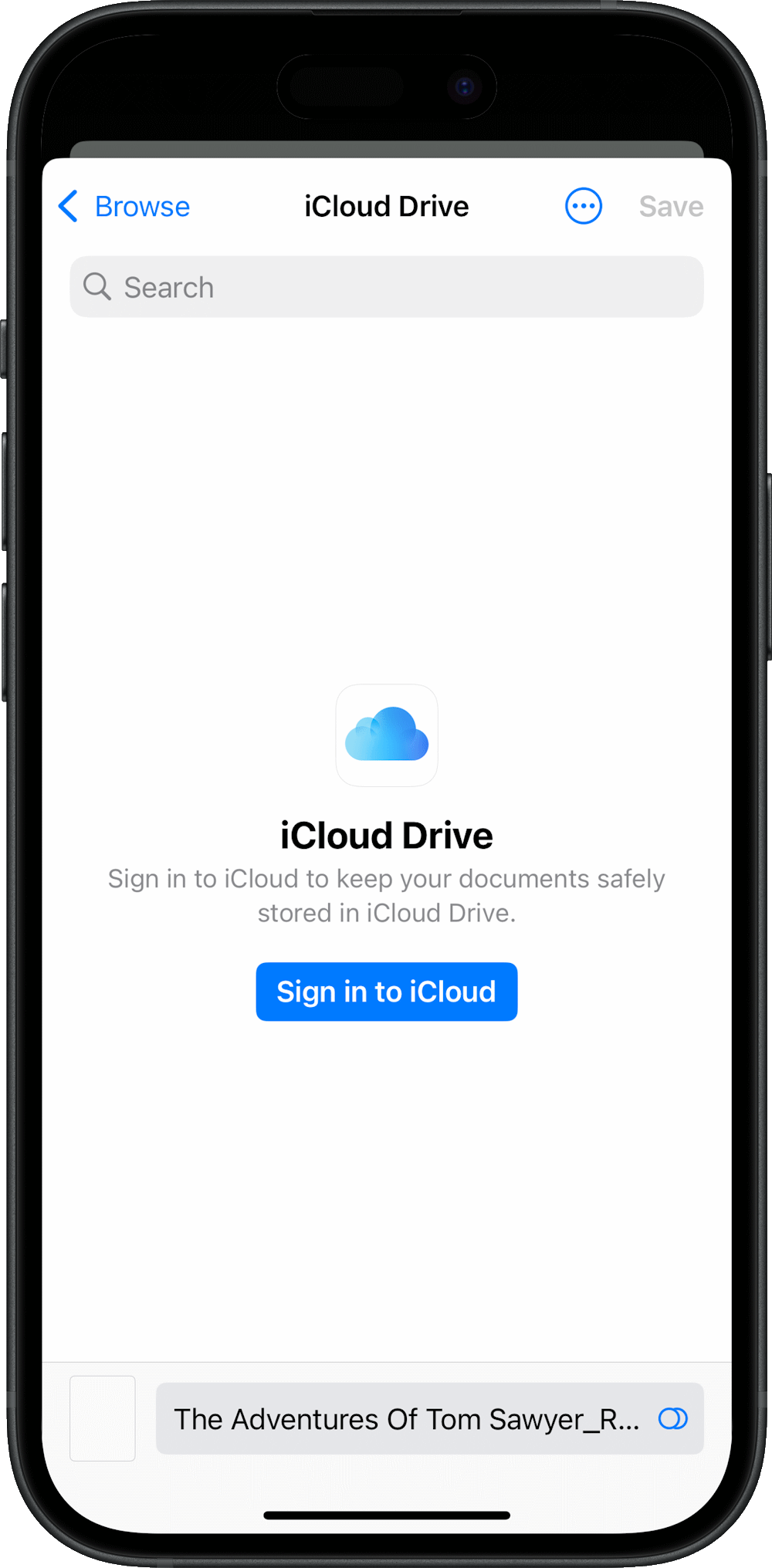
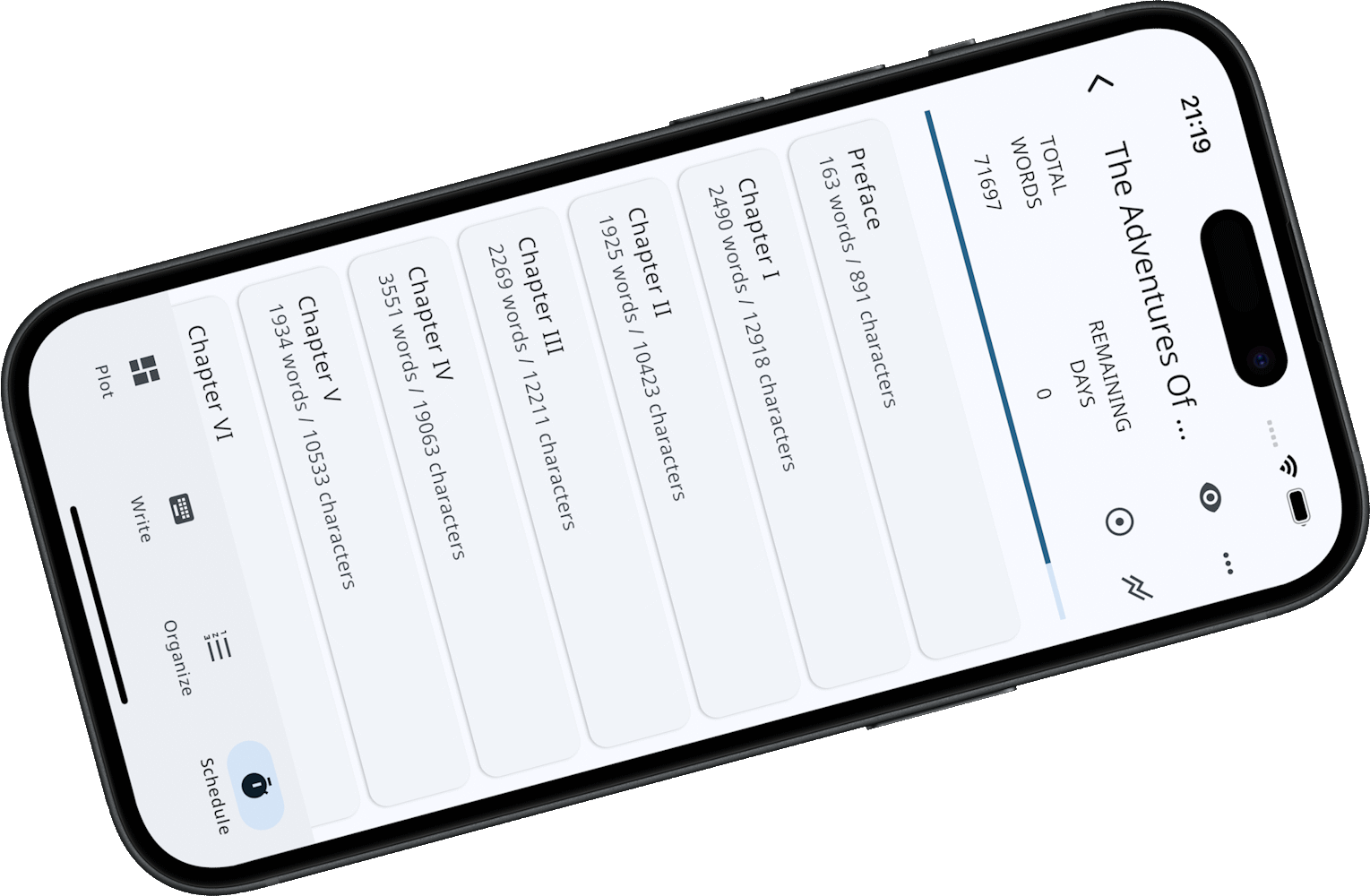
Do you think you'll never be able to finish writing your book? Track your progress and set goals to increase focus on the final result.
How many books can I write with Novelist?
There is no maximum number of books you can write using Novelist. The only limit is your imagination!
Will there ever be a cloud version?
Yes, probably. A web based cloud version is already in development, but there's no timing schedule or pricing information at the moment.
How are the features to be added established?
Every feature is carefully planned and introduced only after extensive testing. If you have feedbacks, suggestions, critics, feature requests or anything else please contact us.
Plot
Plot is when you list all the elements of your story, like on a board. Items can be edited, moved, merged, splitted, reordered and deleted. You can even set a status, write notes and texts or add tags, metadata and pictures to each item. Categories are completely customizable, as are metadata and statuses.
Outline
Outline is when you put all the items together to compose scenes. Each scene is a piece of your story and can be annotated or written directly in our app!
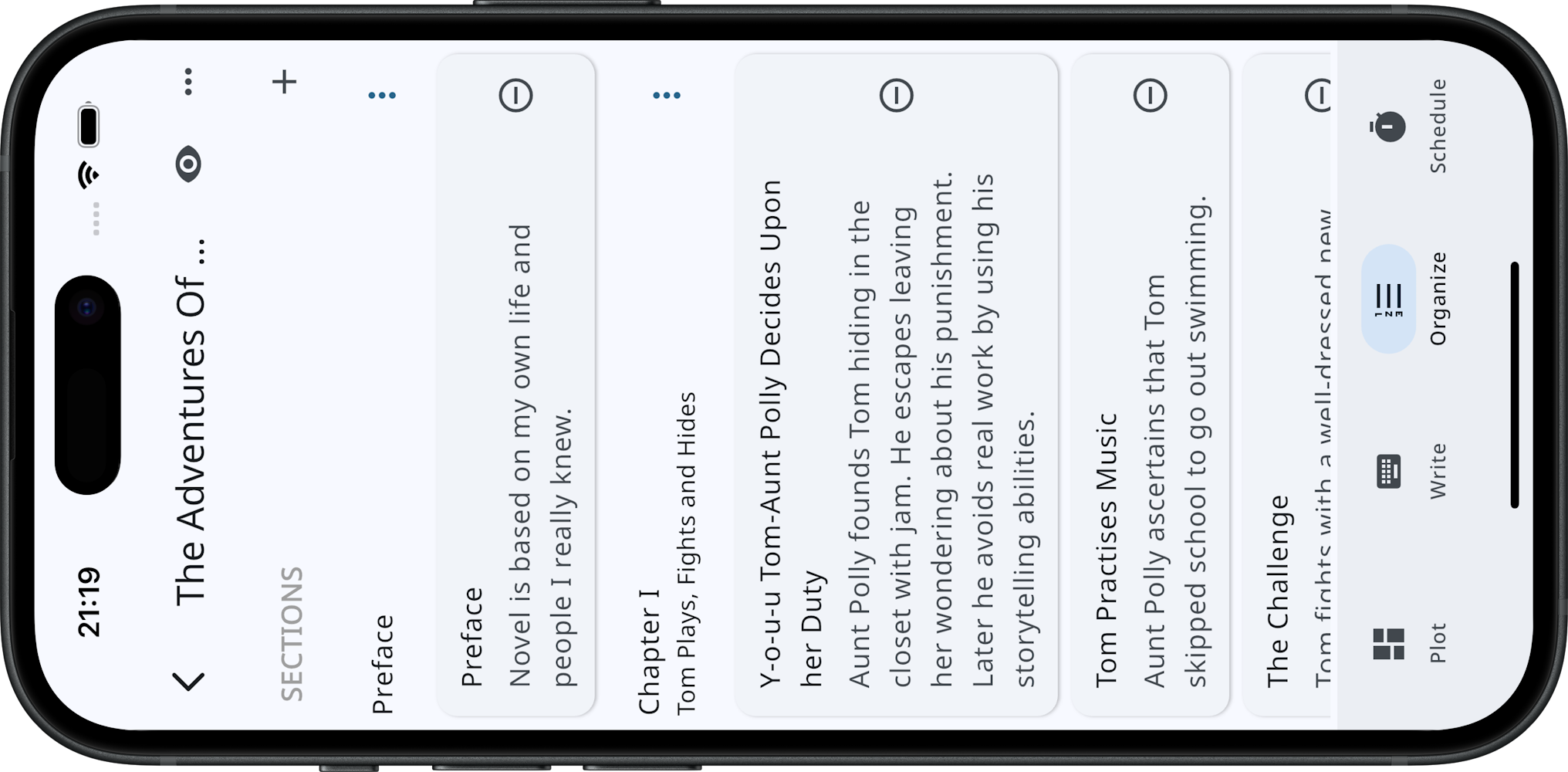
Organize
Organize is when you structure your scenes in acts, parts, chapters and so on. Your imagination is the limit.
Schedule
Schedule is when you set your goals: word count or due date.
Check out below Novelist's video from YouYube, for a brief showcase of its screens and features.
Downloads
Users
Reviews
Average Rating
Our goal is to make sure that every Novelist user can meet his needs and expectations.
You should also check out our Terms & Conditions and Privacy Policy.
Some reviews of our application found online. Here's what they say about us...
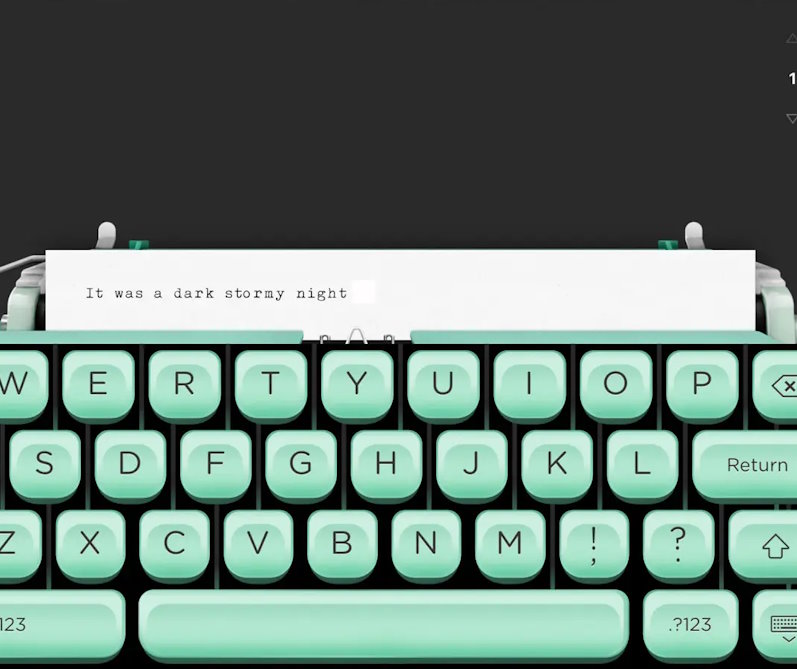
“Check your app store for software like Novelist which has a text editor function and templates for organizing…”
Read More
“Novelist has every tool you could need to plan and write every detail of your book from scratch.”
Read More
“If you own an Android device and are looking for a way to develop an idea, this app is definitely worth a look.”
Read More
“When I found this app it looked great but was still immature, but now I must say it has become my favorite.”
Read MoreUse the contacts provided to send us your message, feedback, feature request, or anything else.
Copyright © Novelist by Return True