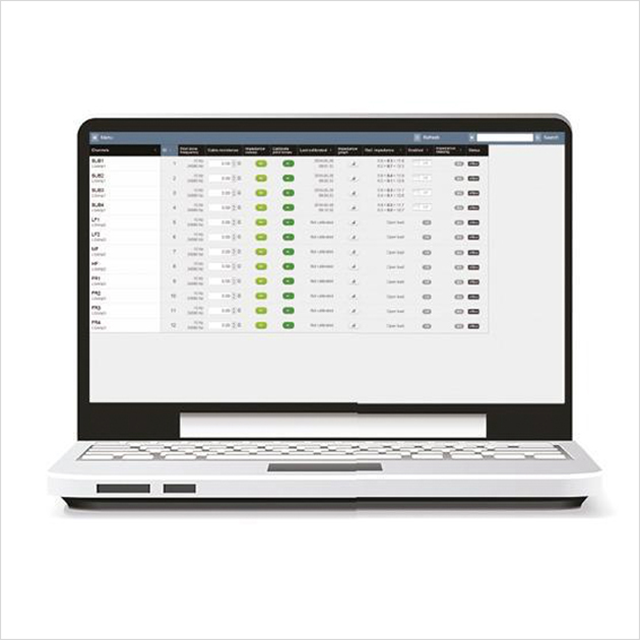
CAFE with ESP: Integrated Software for Fast System Configuration and Surveillance
In addition to providing comprehensive system surveillance and configuration of RPM and other amplifier features such as ISVPL and Breaker Emulation Limiter (BEL), CAFÉ also includes valuable help to save the environment. In combination with the RPM configuration CAFÉ can accurately predict, based on the true SPL and speaker requirements of the individual loads for the given project, estimations of average mains current draw and generated heat in BTU. With our amplifiers' innovative power supply technologies (true Power Factor Correction utilizing Current Draw Modeling) the required mains draw is already best in class in relation to burst power output, but in combination with the BEL the mains draw can also be safeguarded to the predicted level. The end result is precise mains management and thermal control, which allows more accurate (rather than over-specified) provision of mains distribution, cabling and cooling. This technology suite reduces lifetime running costs and minimizes environmental impact. It also reduces demands on UPS systems.
CAFÉ also features an innovative design aid: the Equipment Specification Predictor (ESP). ESP examines the system SPL and speaker requirements for a given project and aids in transforming that data into circuit and amplifier channel requirements. On a system level, CAFÉ supplies a recommendation for optimized placement of channels into amplifiers for the most cost effective solution.
The software incorporates updated Hamlib libraries (4.5 or later), which ensures better CAT control and broader compatibility with various transceiver models.
Overwrite the previous directory to retain your existing COM port configurations and audio paths. Optimizing JTDX 2.2.160 Performance Feature / Setting Recommended Configuration Deep or Hint
: Ensure your maidenhead locator is explicitly re-entered in the general configuration tab post-upgrade to allow correct distance and azimuth tracking. jtdx 22160 updated
: Refined data streams in the 32A variants significantly reduce side-emission distortion for operators utilizing high-dynamic-range SDR hardware. Feature Breakdown: JTDX Official vs. JTDX Improved
While early builds had issues, later candidates like RC7/RC8 have addressed bugs related to the SuperFox (SFH) mode used in major DXpeditions. Rig Control & Hamlib Updates include the latest DLLs to support newer radios like the Flex 8000 series The "improved" branch adds unique features like Band Hopping The software incorporates updated Hamlib libraries (4
This public link is valid for 7 days and shares a thread, including any personal information you added. This link or copies made by others cannot be deleted. If you share with third parties, their policies apply. Can’t copy the link right now. Try again later. JTDX 2.2.160 rc7 grid issue
Saves processing cycles if you plan on actively transmitting. Under 0.5 seconds deviation : Refined data streams in the 32A variants
The long-awaited JTDX v2.2.160 update has entered the hands of the community, bringing with it the essential tools required for the current era of digital DXing. By integrating the WSJT-X SuperFox decoder, the development team has ensured that JTDX remains a top-tier choice for operators chasing rare DXpeditions.
: General users can typically find the most stable recent releases, like v2.2.159 , on platforms like SourceForge or FileHippo .
Beyond new features, version 2.2.160 addresses numerous stability and display issues:
