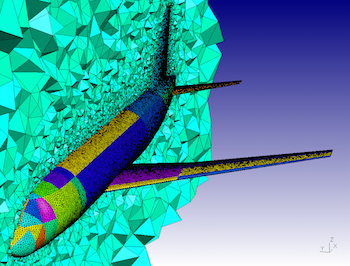

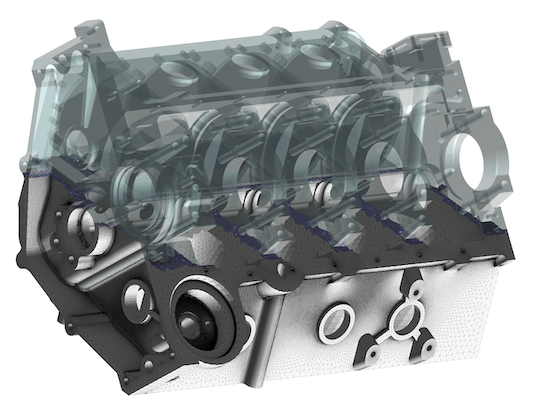
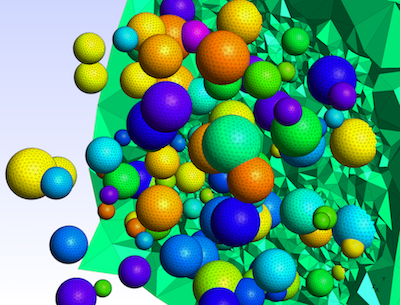
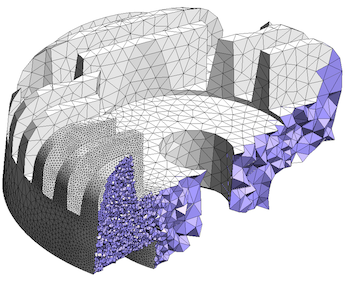
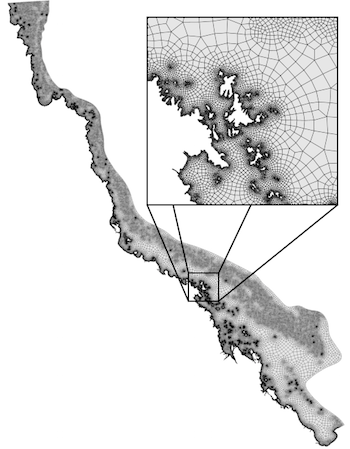
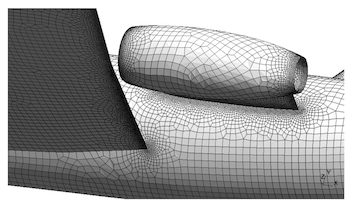
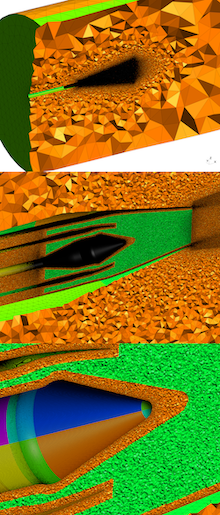
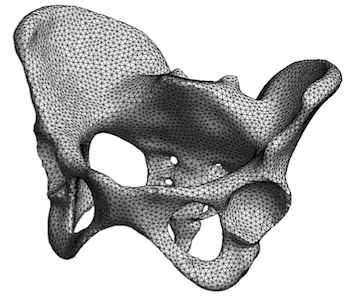
Gmsh is an open source 3D finite element mesh generator with a built-in CAD
engine and post-processor. Its design goal is to provide a fast, light and
user-friendly meshing tool with parametric input and flexible visualization
capabilities. Gmsh is built
around four modules
(geometry, mesh, solver and post-processing), which can be controlled with
the graphical user
interface, from
the command
line, using text files written in Gmsh's
own scripting
language (.geo files), or through the C++, C, Python, Julia and
Fortran application
programming interface.
See this general presentation for a high-level overview of Gmsh and the reference manual for the complete documentation, which includes the Gmsh tutorial. The source code repository contains the tutorial source files as well as many other examples.
Gmsh is distributed under the terms of the GNU General Public License (GPL):
pip install
            --upgrade gmsh
'
Make sure to read the tutorial and the FAQ before sending questions or bug reports.
git clone
          https://gitlab.onelab.info/gmsh/gmsh.git
'
pip install -i https://gmsh.info/python-packages-dev
        --force-reinstall --no-cache-dir gmsh
' (on Linux systems without
X windows, use python-packages-dev-nox instead of
python-packages-dev)
If you use Gmsh please cite the following reference in your work (books, articles, reports, etc.): C. Geuzaine and J.-F. Remacle. Gmsh: a three-dimensional finite element mesh generator with built-in pre- and post-processing facilities. International Journal for Numerical Methods in Engineering 79(11), pp. 1309-1331, 2009. You can also cite additional references for specific features and algorithms.
Please report all issues
on https://gitlab.onelab.info/gmsh/gmsh/issues.
Gmsh is copyright (C) 1997-2022 by C. Geuzaine and J.-F. Remacle (see the CREDITS file for more information) and is distributed under the terms of the GNU General Public License (GPL) (version 2 or later, with an exception to allow for easier linking with external libraries).
In short, this means that everyone is free to use Gmsh and to redistribute it on a free basis. Gmsh is not in the public domain; it is copyrighted and there are restrictions on its distribution (see the license and the related frequently asked questions). For example, you cannot integrate this version of Gmsh (in full or in parts) in any closed-source software you plan to distribute (commercially or not). If you want to integrate parts of Gmsh into a closed-source software, or want to sell a modified closed-source version of Gmsh, you will need to obtain a commercial license: please contact us for details.
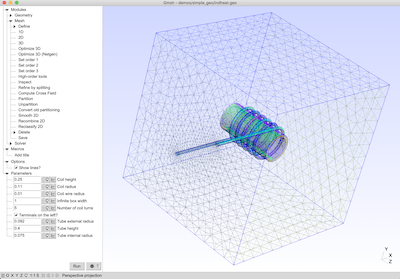
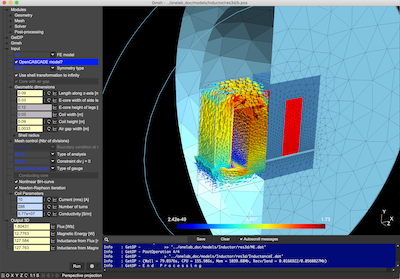
These are two screenshots of the Gmsh user interface, with either the light or dark user interface theme. See the ONELAB web site for more.
The app’s core function—generating bills in seconds—works flawlessly. You can generate monthly recurring bills (MRUs) for hundreds of customers with a single tap. The QR code and shareable payment links make collections significantly easier than physical visits.
Security became a constant focus. Early adopters pushed for hardware-backed keys, mutual TLS for optional cloud interactions, and single-sign-on for operator accounts. The team adopted a minimal-privilege model: panels defaulted to air-gapped operation, with explicit admin consent required to enable remote features. A vulnerability disclosure program and monthly signed firmware images reassured procurement teams hesitant about adding internet-connected devices.
How does it stack up against other calibration tools?
Managing a local cable network involves tracking thousands of set-top boxes (STBs), gathering monthly subscription cash, and updating channel packages while maintaining strict regulatory compliance. The R-Soft platform digitizes these tasks, replacing paper registers and clunky spreadsheets with a mobile-first application. Core Architecture and How It Works r-soft lco panel app
Direct online payment facilities ensure faster transactions with MSOs.
: By optimizing solar energy production, users contribute to a reduction in carbon footprint, supporting global efforts to combat climate change.
[ MSO (Multi-Service Operator) ] ▲ │ (Package Sync & Bulk Payments) ▼ [ R-Soft LCO Panel / App Portal ] ◄──► [ Field Collection Agents ] ▲ │ (Online Payments & Pack Activations) ▼ [ End-User Cable Subscribers ] Security became a constant focus
The is a specialized, cloud-based management platform built by ReliableSoft Technologies Pvt. Ltd. to help Local Cable Operators (LCOs) and Multi-Service Operators (MSOs) run their businesses seamlessly. The app connects back-end subscriber management systems (SMS) with field operations, digital billing, and payment processing tools.
on his phone. He instantly sees which subscribers have pending dues, sends automated alerts via text or WhatsApp, and updates Set Top Box (STB) inventory with a few taps.
For LCOs juggling payments from multiple vendors (MSOs like Siti, GTPL, Hathway), the automatic reconciliation feature is a lifesaver. The app shows exactly who has paid and who hasn't, reducing the "accounting headache" by about 70%. multi-tiered digital distribution networks.
The digital broadcasting landscape has undergone a radical transformation over the last decade, shifting from simple analog transmissions to complex, multi-tiered digital distribution networks. At the center of this evolution for many regional providers is the , a specialized management application designed to streamline the operations of Local Cable Operators (LCOs). By integrating subscriber management, billing, and technical provisioning into a single interface, R-Soft has become a critical tool for maintaining efficiency in a highly competitive market.
Tracks collection agents and technicians out in the field using real-time location services.