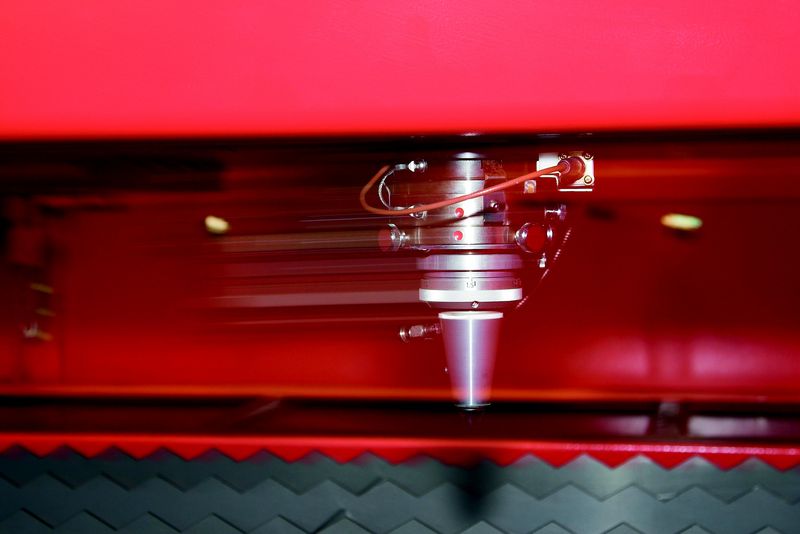
The QUATTRO is one of the most flexible, efficient and compact lasers on the market. Many metal working companies have a large number of components to manufacture but only need to produce one or two at a time. Ease of use, plus low operating costs make the QUATTRO the ideal solution for low volumes, without forgoing precision and quality.
This machine is no longer available.
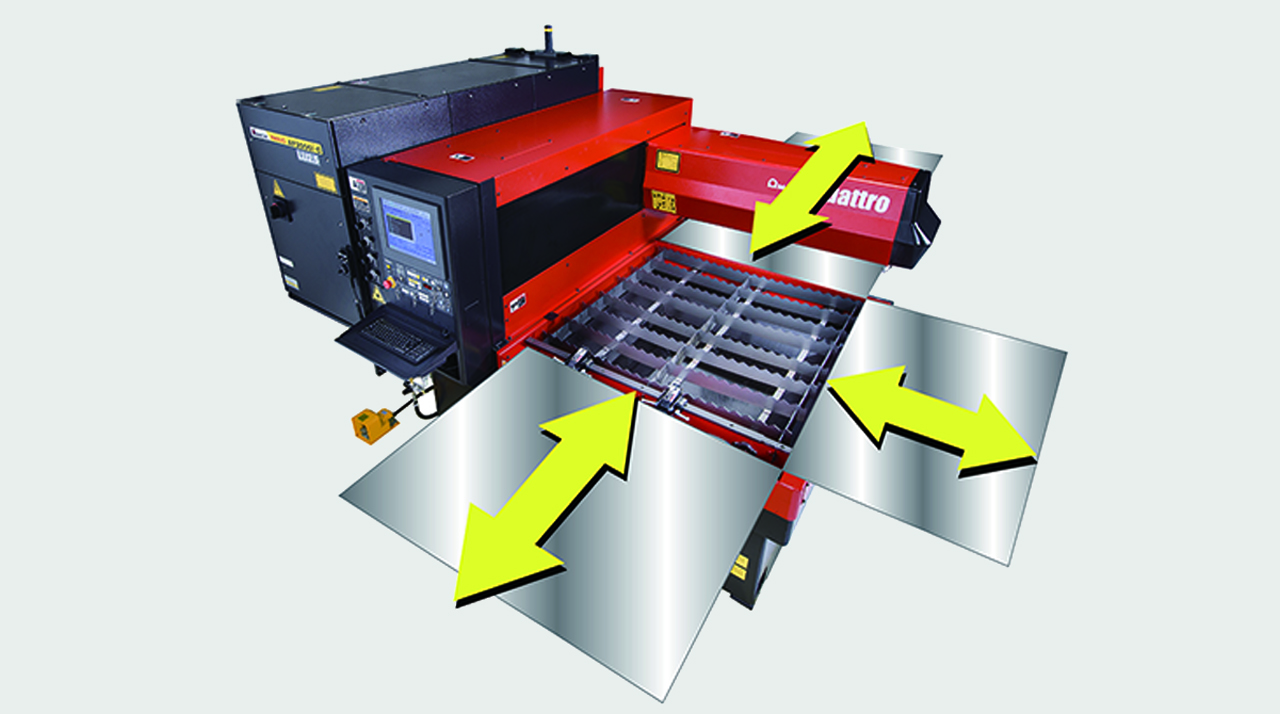
FULL ACCESS TO THE CUTTING AREA:
The three accessible sides of the QUATTRO laser facilitate sheet metal loading and unloading. Large-sized sheets which are bigger than the work area can also be processed, repositioning them manually.
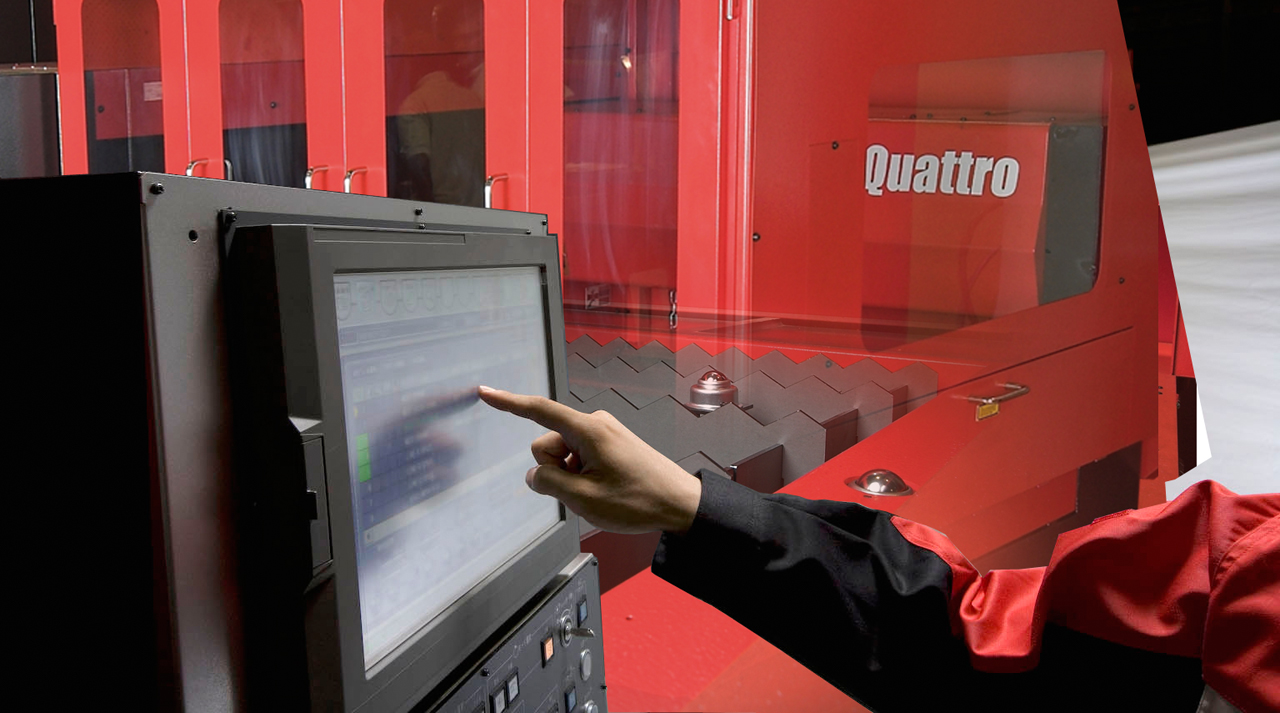
COMPACT STRUCTURE:
With a footprint of just 6.4 m2, the QUATTRO is AMADA's smallest laser. The oscillator and numerical control are contained within the machine to maintain its extremely compact size.
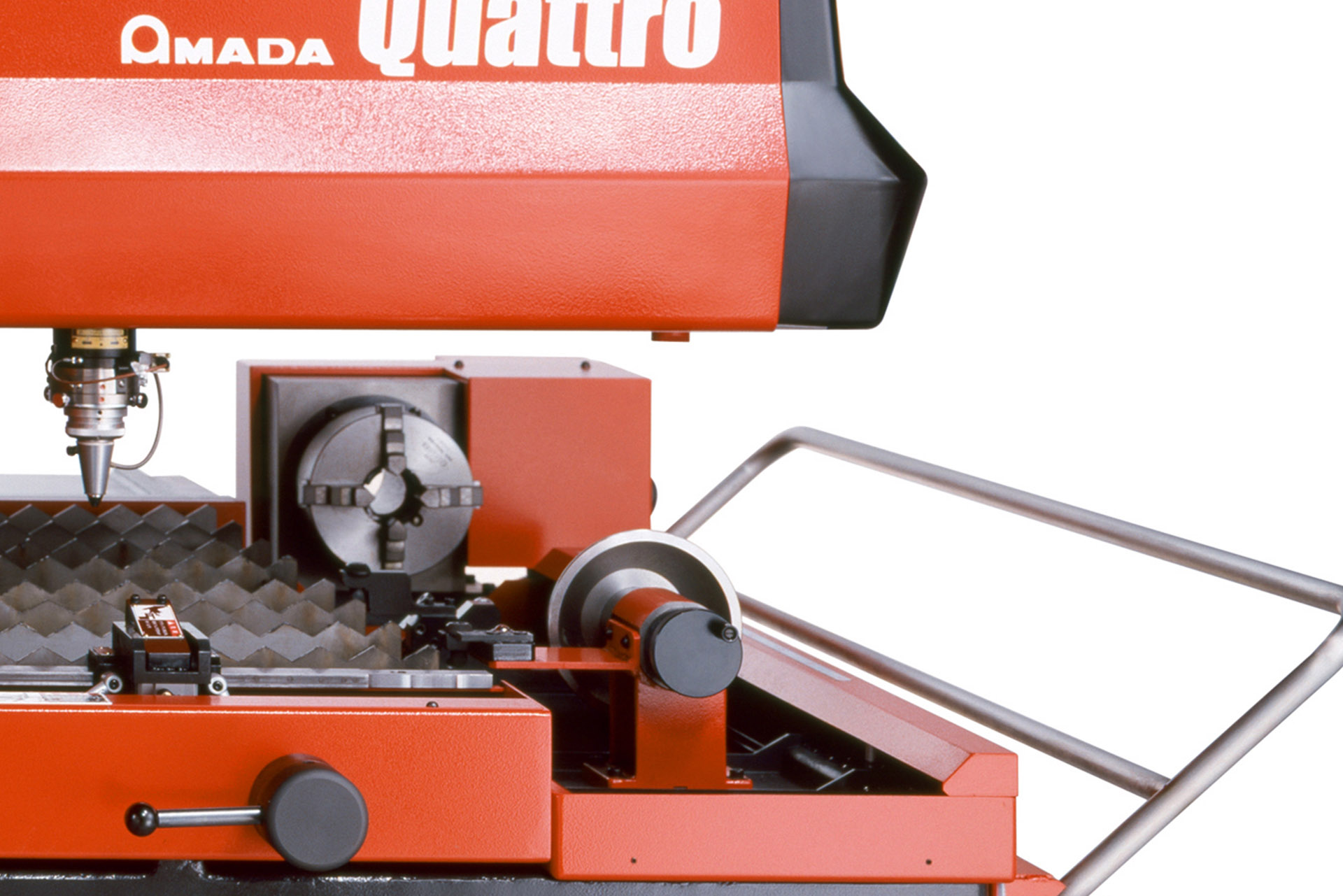
DIVERSIFIED PROCESSING:
With the QUATTRO, not only sheet metal but rectangular and square tubes can be processed, providing even greater flexibility. (Option)
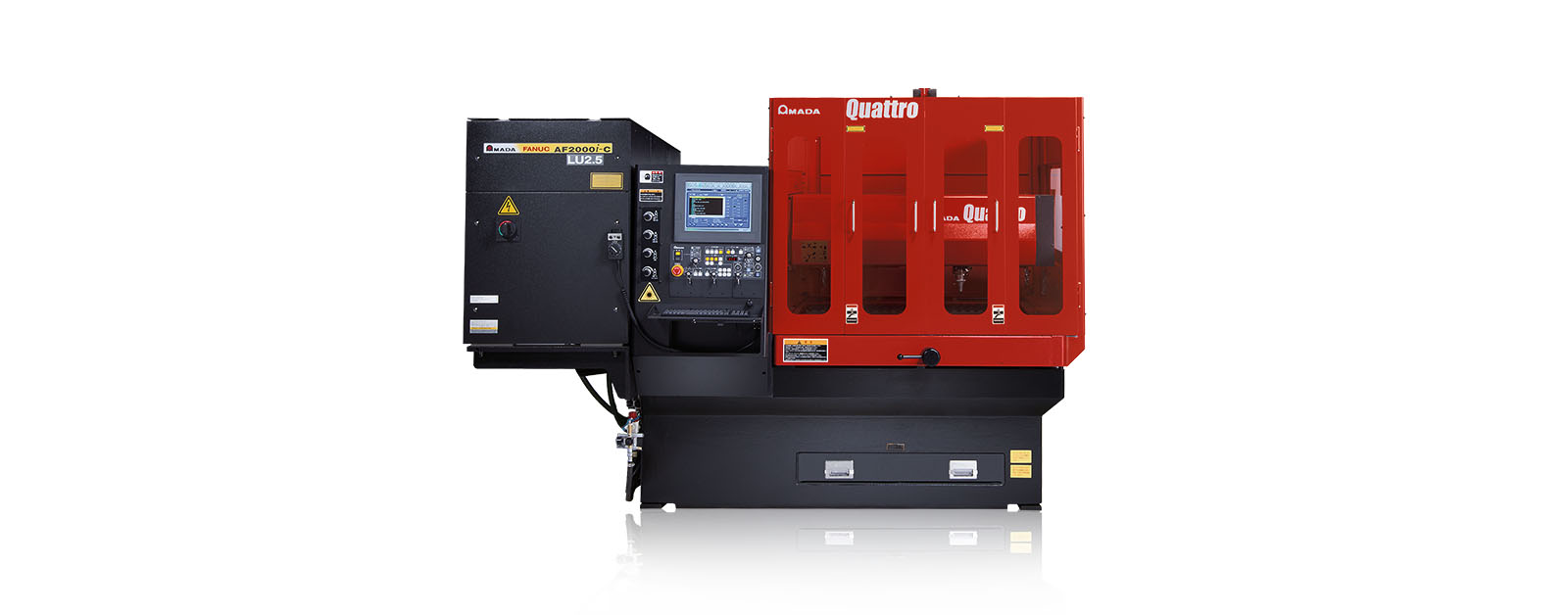
FULL ACCESS TO THE CUTTING AREA:
The three accessible sides of the QUATTRO laser facilitate sheet metal loading and unloading. Large-sized sheets which are bigger than the work area can also be processed, repositioning them manually.
COMPACT STRUCTURE:
With a footprint of just 6.4 m2, the QUATTRO is AMADA's smallest laser. The oscillator and numerical control are contained within the machine to maintain its extremely compact size.
DIVERSIFIED PROCESSING:
With the QUATTRO, not only sheet metal but rectangular and square tubes can be processed, providing even greater flexibility. (Option)
| QUATTRO | QUATTRO | |
|---|---|---|
| Laser power (W) | 1000 | 2500 |
| Machine type | CO₂ flying optic laser | CO₂ flying optic laser |
| Working range X x Y (mm) | 1250 x 1250 | 1250 x 1250 |
| Working range Z-axis (mm) | 100 | 100 |
| Table loading weight (kg) | 80 | 160 |
Material thickness (max.)*: | ||
| - Mild steel (mm) | 6 | 12 |
| - Stainless steel (mm) | 2 | 5 |
| - Aluminium (mm) | 1 | 4 |
Dimensions: | ||
| Length (mm) | 2900 | 2950 |
| Width (mm) | 2450 | 2450 |
| Height (mm) | 2160 | 2160 |
| Weight (kg) | 3750 | 4150 |
* Maximum thickness value depends on material quality and environmental conditions
Technical data can vary depending on configuration / options
Please contact us for more details and options or download our brochure

For your safe use.
Be sure to read the user manual carefully before use.
When using this product, appropriate personal protection equipment must be used.

Laser class 1 when operated in accordance to EN 60825-1
in 1927 while in prison. It represents a person's readiness to sacrifice themselves for a greater cause. 2. Plot Summary Index The Catalyst:
Won Best Movie at the Filmfare Awards and was India's official entry for the 2007 Academy Awards. 👥 Characters & Historical Parallels
Sukhi is the vulnerable, intensely loyal comic relief of the group. As Rajguru, his fierce loyalty translates into ultimate sacrifice on the gallows.
: The group transforms from passive observers into radical anti-corruption activists, choosing the ultimate sacrifice over compliance. 2. The Historical Timeline (1920s-1930s India) rang de basanti index
Thousands of young Indians—many of whom had watched Rang De Basanti as teenagers—gathered at India Gate. They were not protesting with traditional political party flags. Instead, they held candles and placards. They chanted "Bhagat Singh" slogans.
Why the silence? Experts point to a fragmented and cautious generation. India's 377 million Gen Z individuals are vast but deeply divided by caste, region, and class, making a unified national movement unlikely. Furthermore, the state's ability to label dissent as "anti-national" and deploy digital surveillance has raised the stakes significantly. Many young Indians feel their economic precarity more acutely than their political outrage. Unlike their South Asian neighbors, they fear that street protests could destabilize their fragile economic prospects.
The Catalyst: Caste-based atrocities in rural Uttar Pradesh. The Outcome: This film came close. It triggered a national conversation about manual scavenging and Dalit rights that moved beyond Twitter into village council meetings. However, the RDB Index penalizes it slightly because the audience identified with the savior cop (Ayushmann Khurrana) rather than the victims. RDB required the audience to see themselves as the protestors , not the heroes. in 1927 while in prison
This public link is valid for 7 days and shares a thread, including any personal information you added. This link or copies made by others cannot be deleted. If you share with third parties, their policies apply. Can’t copy the link right now. Try again later.
Named after Rakeysh Omprakash Mehra’s iconic 2006 film Rang De Basanti , this concept measures how a single piece of mainstream art can trigger real-world political activism, ignite youth-led protests, and permanently alter public consciousness. What is the "Rang De Basanti Index"?
If you want to see this "index" in action, look no further than , India’s first P2P social investment platform. The Mission: Plot Summary Index The Catalyst: Won Best Movie
Khalbali: An experimental Sufi-rock fusion representing internal turmoil.
The early acts index the apathy of the Indian youth, who view their country as inherently broken. The later acts document their painful transition into active socio-political agents.
American films like The Social Network (viral connection) or Vice (Dick Cheney’s legacy) are excellent biopics, but they would score a 2/10 on the RDB Index. Why?
Cinema in India is more than just a source of entertainment. It acts as a mirror to society, a catalyst for political discourse, and a barometer of public emotion. While financial markets rely on the Nifty or Sensex to measure economic health, film scholars and sociologists often look for qualitative metrics to judge the cultural impact of cinema.