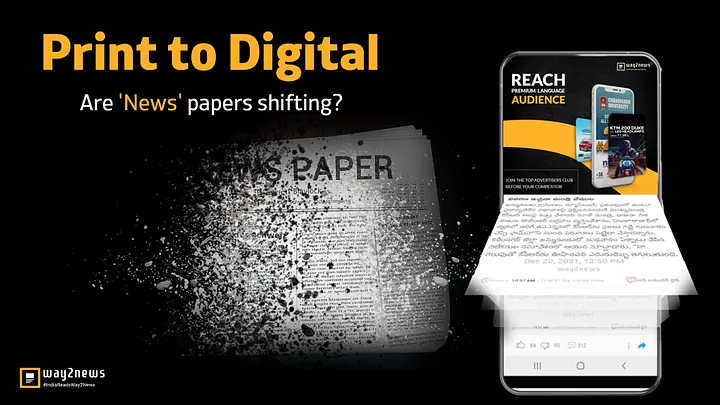
One App - Eight languages.
Read news in your preferred language.
video bokep suruh bocil sekolah nyepong kontol temennya
Way2News, India's largest hyperlocal news app covers news from 400 districts and generating more than 4 billion screen views every month - that's 3 times the entire Indian population. "Hijrah" (migration towards faith) has become an aesthetic
Let your friends read the news you intend to share with them.
Travel, Health, Finance & many more- Pick Magazines of your favourite topic and lay back to read.
Cinema, Business or sports, read the News from the category of your preference.
Reading in dark? Then make it better for your eyes with 'Night Mode'
Read the News articles at ease by just flipping them up and down.
Participate in Polls on different issues and contribute your opinion to country wide taken stats.
Read the most trendy and widely shared flips from 'Top Buzz'.
Save the articles you want to revisit by adding them to 'My bookmarks'.
Way2News brings real time news. We understand your reading preference and promise to deliver personalized news flips.

dominates daily engagement and shopping habits, especially for young women. Content Preferences: Youth are shifting toward short micro-dramas
Making up over half of the population, Indonesian youth are not just participating in the global conversation—they are actively shaping it. With a unique blend of deep-rooted traditions, hyper-digital connectivity, and a fierce entrepreneurial spirit, Indonesian youth culture is a fascinating ecosystem.
"Hijrah" (migration towards faith) has become an aesthetic. Young people follow "ustadz" (preachers) like and Hanif Attar on Instagram Reels just as they follow beauty gurus. The trend is "soft Islamism"—cute animations of Quranic verses, "Halal" dating advice, and motivational quotes about entrepreneurship. It is less about theological rigidity and more about lifestyle branding.
Indonesian youth have embraced "live shopping." Creators and micro-influencers sell skincare, fashion, and gadgets via interactive livestreams, blurring the lines between entertainment and retail.
The trend driving the algorithm? While their parents watched Korean dramas, this generation is obsessed with Indonesian horror stories on TikTok, remixes of dangdut koplo (folk-pop) set to EDM beats, and the explosion of folklorecore —wearing traditional Batik not for formal events, but as streetwear.
Anime serves as a powerful illustration of this community-building. Dentsu's research revealed that roughly one in five Indonesian Gen Z anime fans actively post about anime on social media or participate in dedicated Discord servers. For them, anime is "both a creative outlet and a cultural refuge," a platform for self-expression, building friendships, and participating in global subcultures through memes, fan art, and cosplay. This shift from passive entertainment to active cultural creation signals a deeper evolution: fandom is no longer a niche hobby but a core part of youth identity.
Scroll for five minutes, and you will see a university student in Surabaya reviewing a $2,000 Louis Vuitton bag next to a "Warteg" (street food stall) worker dancing while plating fried tofu. This isn't irony; it is the kaleidoskop of emerging Indonesia—where extreme aspiration meets humble reality.
Viral food trends constantly rotate, usually centering on extreme spice levels, such as Seblak (spicy wet crackers) and Ayam Geprek (crushed crispy fried chicken with chili paste). Social Consciousness and Mental Health Advocacy
Sustainability is a massive trend among Indonesian youth, but it’s driven just as much by aesthetics and price as it is by the environment.
Content creation has been legitimized as a highly sought-after career path. From micro-influencers in rural regions to mega-creators in Jakarta, young Indonesians are leveraging local folklore, daily struggles, and comedic skits to build massive, monetization-ready communities. Fashion and Identity: The "Skena" and Heritage Revival
There is a heavy preference (73%) for micro-content and short-form videos. The "Jedag Jedug" editing style remains a core form of local creative expression on TikTok .
The sonic landscape of Indonesian youth is a testament to their creativity. In 2025, the airwaves are dominated by a groundbreaking new genre and a resurgence of local identity.
There is no denying the massive influence of Korean Pop Culture (K-Pop, K-Dramas, K-Beauty) in Indonesia. However, what’s fascinating is how Indonesian youth blend this with fierce national pride.
: This imagery cut through traditional political discourse, making the movement highly sharable. Within weeks, the straw-hat skull appeared at youth-led protests worldwide, from Manila to Paris , proving that Indonesian youth can turn local grievances into global icons. Emerging Cultural Trends

dominates daily engagement and shopping habits, especially for young women. Content Preferences: Youth are shifting toward short micro-dramas
Making up over half of the population, Indonesian youth are not just participating in the global conversation—they are actively shaping it. With a unique blend of deep-rooted traditions, hyper-digital connectivity, and a fierce entrepreneurial spirit, Indonesian youth culture is a fascinating ecosystem.
"Hijrah" (migration towards faith) has become an aesthetic. Young people follow "ustadz" (preachers) like and Hanif Attar on Instagram Reels just as they follow beauty gurus. The trend is "soft Islamism"—cute animations of Quranic verses, "Halal" dating advice, and motivational quotes about entrepreneurship. It is less about theological rigidity and more about lifestyle branding.
Indonesian youth have embraced "live shopping." Creators and micro-influencers sell skincare, fashion, and gadgets via interactive livestreams, blurring the lines between entertainment and retail.
The trend driving the algorithm? While their parents watched Korean dramas, this generation is obsessed with Indonesian horror stories on TikTok, remixes of dangdut koplo (folk-pop) set to EDM beats, and the explosion of folklorecore —wearing traditional Batik not for formal events, but as streetwear.
Anime serves as a powerful illustration of this community-building. Dentsu's research revealed that roughly one in five Indonesian Gen Z anime fans actively post about anime on social media or participate in dedicated Discord servers. For them, anime is "both a creative outlet and a cultural refuge," a platform for self-expression, building friendships, and participating in global subcultures through memes, fan art, and cosplay. This shift from passive entertainment to active cultural creation signals a deeper evolution: fandom is no longer a niche hobby but a core part of youth identity.
Scroll for five minutes, and you will see a university student in Surabaya reviewing a $2,000 Louis Vuitton bag next to a "Warteg" (street food stall) worker dancing while plating fried tofu. This isn't irony; it is the kaleidoskop of emerging Indonesia—where extreme aspiration meets humble reality.
Viral food trends constantly rotate, usually centering on extreme spice levels, such as Seblak (spicy wet crackers) and Ayam Geprek (crushed crispy fried chicken with chili paste). Social Consciousness and Mental Health Advocacy
Sustainability is a massive trend among Indonesian youth, but it’s driven just as much by aesthetics and price as it is by the environment.
Content creation has been legitimized as a highly sought-after career path. From micro-influencers in rural regions to mega-creators in Jakarta, young Indonesians are leveraging local folklore, daily struggles, and comedic skits to build massive, monetization-ready communities. Fashion and Identity: The "Skena" and Heritage Revival
There is a heavy preference (73%) for micro-content and short-form videos. The "Jedag Jedug" editing style remains a core form of local creative expression on TikTok .
The sonic landscape of Indonesian youth is a testament to their creativity. In 2025, the airwaves are dominated by a groundbreaking new genre and a resurgence of local identity.
There is no denying the massive influence of Korean Pop Culture (K-Pop, K-Dramas, K-Beauty) in Indonesia. However, what’s fascinating is how Indonesian youth blend this with fierce national pride.
: This imagery cut through traditional political discourse, making the movement highly sharable. Within weeks, the straw-hat skull appeared at youth-led protests worldwide, from Manila to Paris , proving that Indonesian youth can turn local grievances into global icons. Emerging Cultural Trends