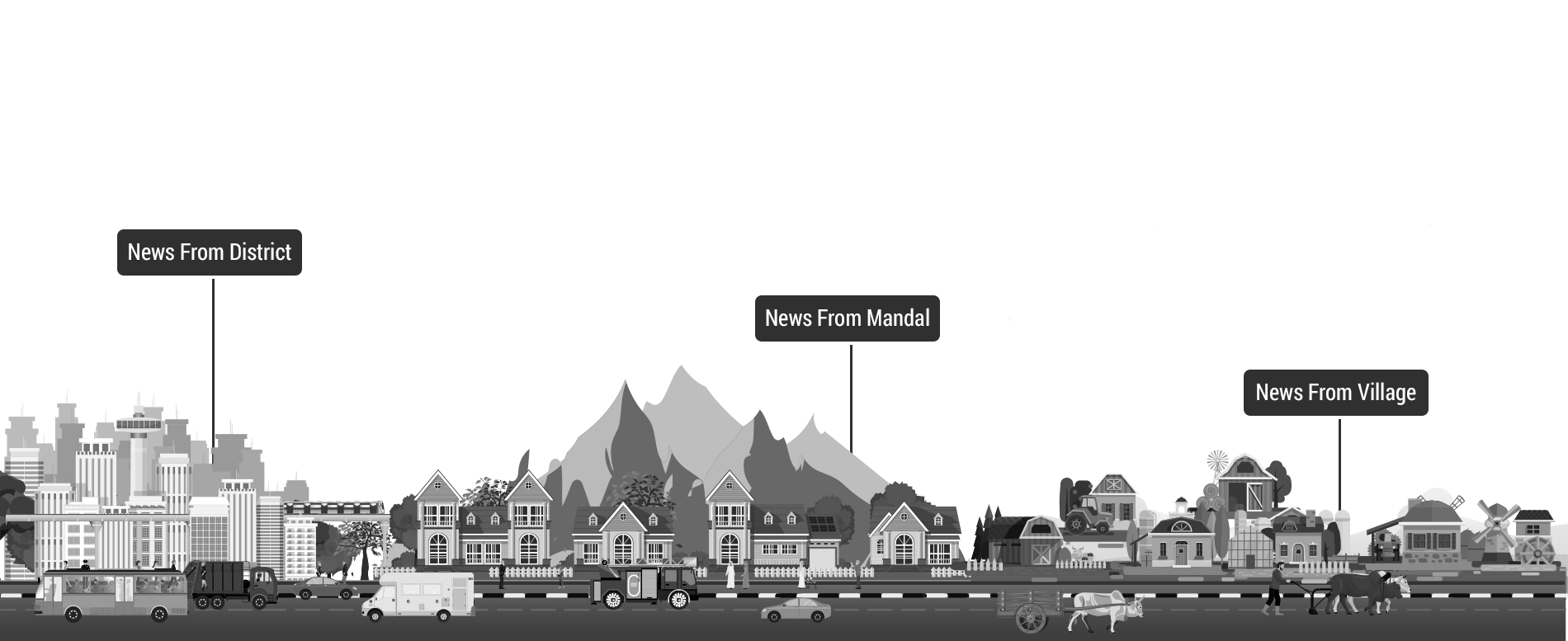
Way2News, India's largest hyperlocal news app covers news from 400 districts and generating more than 4 billion screen views every month - that's 3 times the entire Indian population. Transgender women of color, including Marsha P
Let your friends read the news you intend to share with them.
Travel, Health, Finance & many more- Pick Magazines of your favourite topic and lay back to read.
Cinema, Business or sports, read the News from the category of your preference.
Reading in dark? Then make it better for your eyes with 'Night Mode'
Read the News articles at ease by just flipping them up and down.
Participate in Polls on different issues and contribute your opinion to country wide taken stats.
Read the most trendy and widely shared flips from 'Top Buzz'.
Save the articles you want to revisit by adding them to 'My bookmarks'.
Way2News brings real time news. We understand your reading preference and promise to deliver personalized news flips.

Transgender women of color, including Marsha P. Johnson and Sylvia Rivera, were central figures in the Stonewall uprising, which catalyzed the modern gay liberation movement.
Despite these tensions, trans people have enriched LGBTQ culture in irreplaceable ways.
The Intersection of the Transgender Community and LGBTQ+ Culture
Despite significant cultural visibility, the transgender community faces distinct systemic hurdles that often require focused activism within and outside the broader LGBTQ+ movement.
A transgender person can have any sexual orientation. A trans man might be gay, straight, bisexual, or asexual. Integrating the "T" into the LGBTQ+ acronym represents a political and social alliance rather than a categorization of desire. This alliance acknowledges that both groups challenge rigid, traditional patriarchal norms regarding gender roles and heteronormativity. Cultural Contributions and Language
Furthermore, the community has led the shift toward gender-affirming language in mainstream society. The widespread introduction of sharing pronouns (he/him, she/her, they/them), the use of honorifics like "Mx.", and the adoption of gender-neutral terms like "sibling" or "folks" stem directly from transgender advocacy for validation and visibility. Contemporary Challenges and Activism
Invented the "House" system, creating a model for chosen families and mentorship.
Despite being under the same umbrella, the transgender community faces distinct hurdles that cisgender members of the LGBTQ+ community might not:
The modern LGBTQ+ rights movement was largely built on the courage of transgender and gender-nonconforming individuals. Historically, the boundaries between sexual orientation and gender identity were fluid, with marginalized individuals finding safety in the same underground communities. The Spark of Stonewall
The "coming out" narrative is a cornerstone of LGBTQ culture. For a gay person, coming out is about revelation—revealing an attraction to others. For a trans person, coming out is often about transformation—asking the world to see you as a different gender entirely. This can require changing pronouns, names, clothing, and sometimes undergoing medical procedures (hormones or surgery). The social stakes are often higher for trans people, as their visibility is constant and cannot be hidden once they transition.

Transgender women of color, including Marsha P. Johnson and Sylvia Rivera, were central figures in the Stonewall uprising, which catalyzed the modern gay liberation movement.
Despite these tensions, trans people have enriched LGBTQ culture in irreplaceable ways.
The Intersection of the Transgender Community and LGBTQ+ Culture
Despite significant cultural visibility, the transgender community faces distinct systemic hurdles that often require focused activism within and outside the broader LGBTQ+ movement.
A transgender person can have any sexual orientation. A trans man might be gay, straight, bisexual, or asexual. Integrating the "T" into the LGBTQ+ acronym represents a political and social alliance rather than a categorization of desire. This alliance acknowledges that both groups challenge rigid, traditional patriarchal norms regarding gender roles and heteronormativity. Cultural Contributions and Language
Furthermore, the community has led the shift toward gender-affirming language in mainstream society. The widespread introduction of sharing pronouns (he/him, she/her, they/them), the use of honorifics like "Mx.", and the adoption of gender-neutral terms like "sibling" or "folks" stem directly from transgender advocacy for validation and visibility. Contemporary Challenges and Activism
Invented the "House" system, creating a model for chosen families and mentorship.
Despite being under the same umbrella, the transgender community faces distinct hurdles that cisgender members of the LGBTQ+ community might not:
The modern LGBTQ+ rights movement was largely built on the courage of transgender and gender-nonconforming individuals. Historically, the boundaries between sexual orientation and gender identity were fluid, with marginalized individuals finding safety in the same underground communities. The Spark of Stonewall
The "coming out" narrative is a cornerstone of LGBTQ culture. For a gay person, coming out is about revelation—revealing an attraction to others. For a trans person, coming out is often about transformation—asking the world to see you as a different gender entirely. This can require changing pronouns, names, clothing, and sometimes undergoing medical procedures (hormones or surgery). The social stakes are often higher for trans people, as their visibility is constant and cannot be hidden once they transition.